Authoritive Self-Service Platform
A SaaS platform that enables creators to build interactive, message-based learning experiences distributed across channels like SMS, WhatsApp, and Microsoft Teams, with AI-assisted content generation and automated delivery workflows.
Role
Full-Stack Engineer
Product Type
Creator platform for interactive messaging programs
Stack
TypeScript, React, Next.js, AWS Lambda, AppSync, Step Functions
Core Areas
Builder UX, AI content generation, multi-channel delivery
The problem
Most creators publish content as static courses, emails, or documents. This platform aimed to make content feel more interactive and accessible by delivering it as structured, conversational experiences directly through channels people already use every day, such as SMS and WhatsApp.
What the platform does
- Lets creators design message-based programs through a web interface
- Distributes content across SMS, WhatsApp, and other channels
- Supports automated program delivery workflows
- Includes AI-assisted content generation and refinement
- Integrates with external tools like Klaviyo and Mailchimp
My contribution
I contributed across the full stack, working on both the creator-facing product experience and the backend architecture that powered program delivery.
- Built and improved parts of the React / Next.js creator interface
- Worked on the program builder and related editing flows
- Integrated strongly typed GraphQL data access in TypeScript
- Contributed to backend services and orchestration flows on AWS
- Worked on AI-assisted content generation and editing experiences
- Helped support third-party integrations and delivery workflows
Architecture
The platform used a serverless architecture with a React / Next.js frontend for creators, AppSync GraphQL as the API layer, Lambda functions for business logic, and Step Functions / event-driven workflows to manage delivery pipelines. This made it possible to support content generation, publishing, and multi-channel distribution in a scalable way.
Technical challenges
- Designing a builder experience that non-technical creators could use comfortably
- Transforming long-form source material into short, message-friendly learning content
- Supporting multiple delivery channels with different content and formatting constraints
- Coordinating serverless workflows for publishing and message delivery
- Balancing flexible content authoring with strongly typed application code
Why this project was interesting
- It combined product design, backend orchestration, and AI-assisted workflows
- It was a real SaaS platform rather than a static marketing site
- It required thinking about both creator UX and delivery infrastructure
- It sat at the intersection of messaging, automation, and content generation
Program builder interface
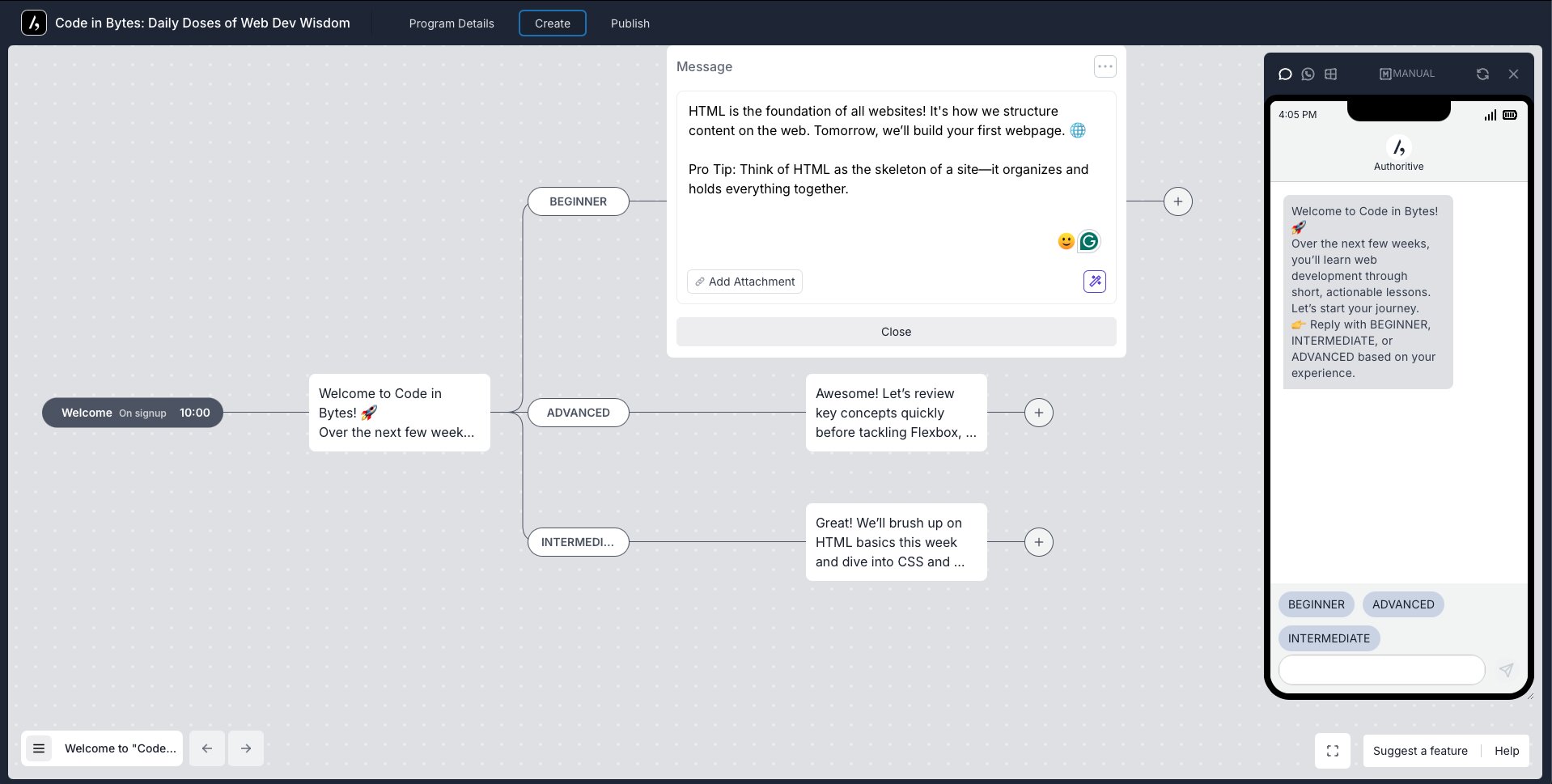
The builder interface allowed creators to structure message-based programs, edit content, and prepare experiences for delivery across multiple channels. A major part of the product value came from making this workflow approachable for non-technical users.
AI content generation
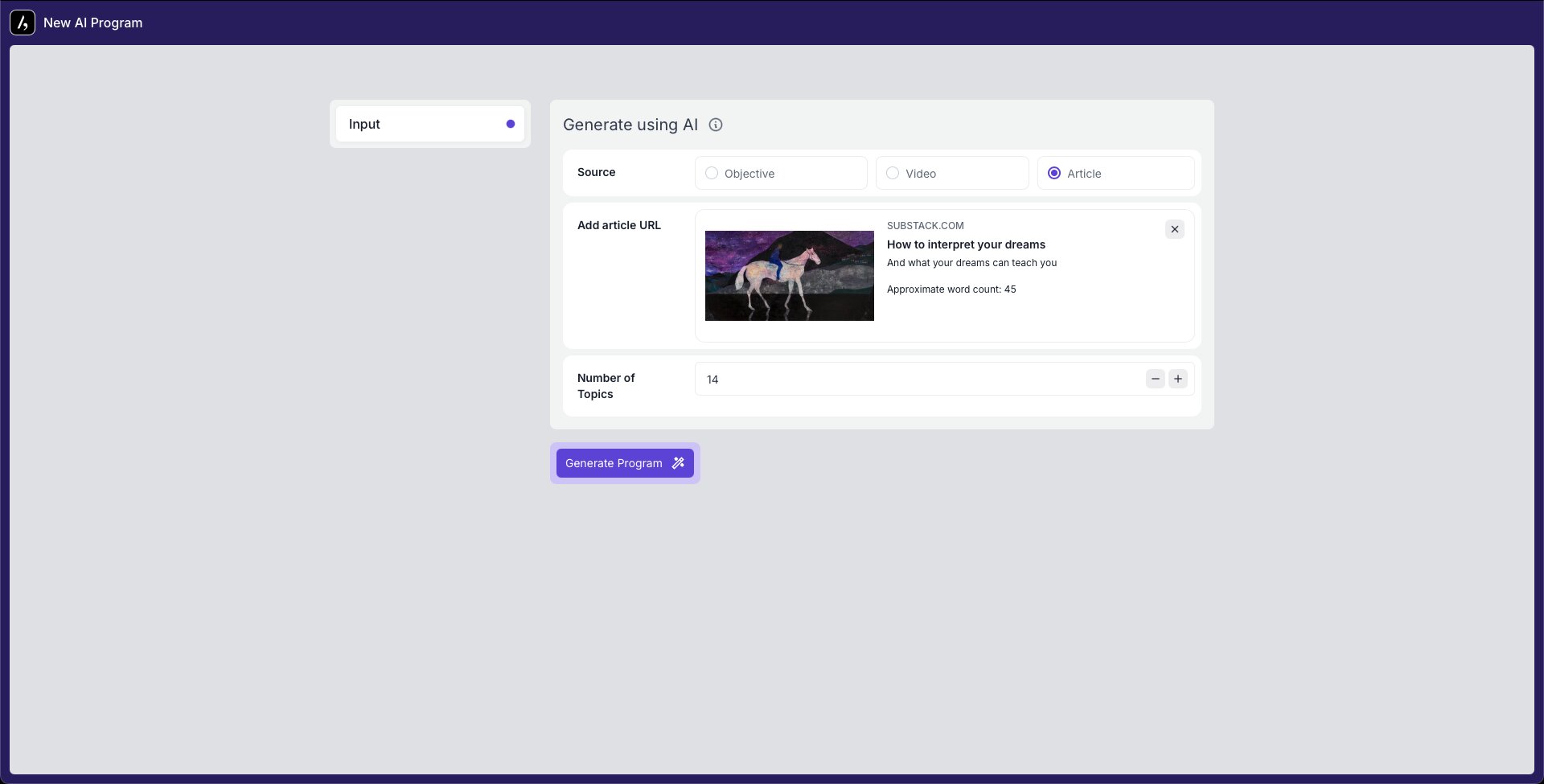
One of the platform's most powerful features was its ability to generate structured micro-learning content from different sources such as free text, YouTube transcripts, and articles. Instead of asking creators to manually author every step, the system helped transform raw material into short, engaging, message-based lessons.
- Generate program content from raw text input
- Convert article-style content into bite-sized message flows
- Use transcript-based input as a starting point for structured lessons
- Refine and improve text directly inside the editor with AI assistance
Product outcomes
The platform gave creators a way to build richer messaging experiences without having to assemble separate systems for editing, automation, delivery, and optimization. It reduced the friction of turning knowledge into interactive, distributed programs.
Key takeaways
This project strengthened my experience building SaaS systems that combine complex frontend workflows, cloud orchestration, AI-assisted features, and multi-channel delivery. It was a strong example of product engineering where UX, automation, and architecture all mattered at the same time.