
Cloud Touchless Massage
Cloud-connected massage chair platform with iPad-based station control, Stripe billing, and AWS serverless infrastructure.
Role
Full-Stack Engineer
Platforms
React Native iPad app, web flows
Stack
TypeScript, React Native, Next.js, AWS, Stripe
Impact
15 iPads, 80% less staff workload, 90% less downtime
The problem
This was not just a booking flow. The platform had to manage real customer payments, station availability, device health, live session control, and operational reliability in a physical retail environment.
What I built
- React Native iPad station control flows
- Serverless AWS backend orchestration
- Stripe billing and webhook logic
- Heartbeat monitoring and reliability flows
- Typed GraphQL integration in TypeScript
Architecture overciew
The platform used React Native and Next.js on the frontend, with AppSync, Lambda and DynamoDB on AWS. Stripe handled payment and membership flows, while device health and session lifecycle events were monitored through heartbeat and event-driven backend logic.
System architecture
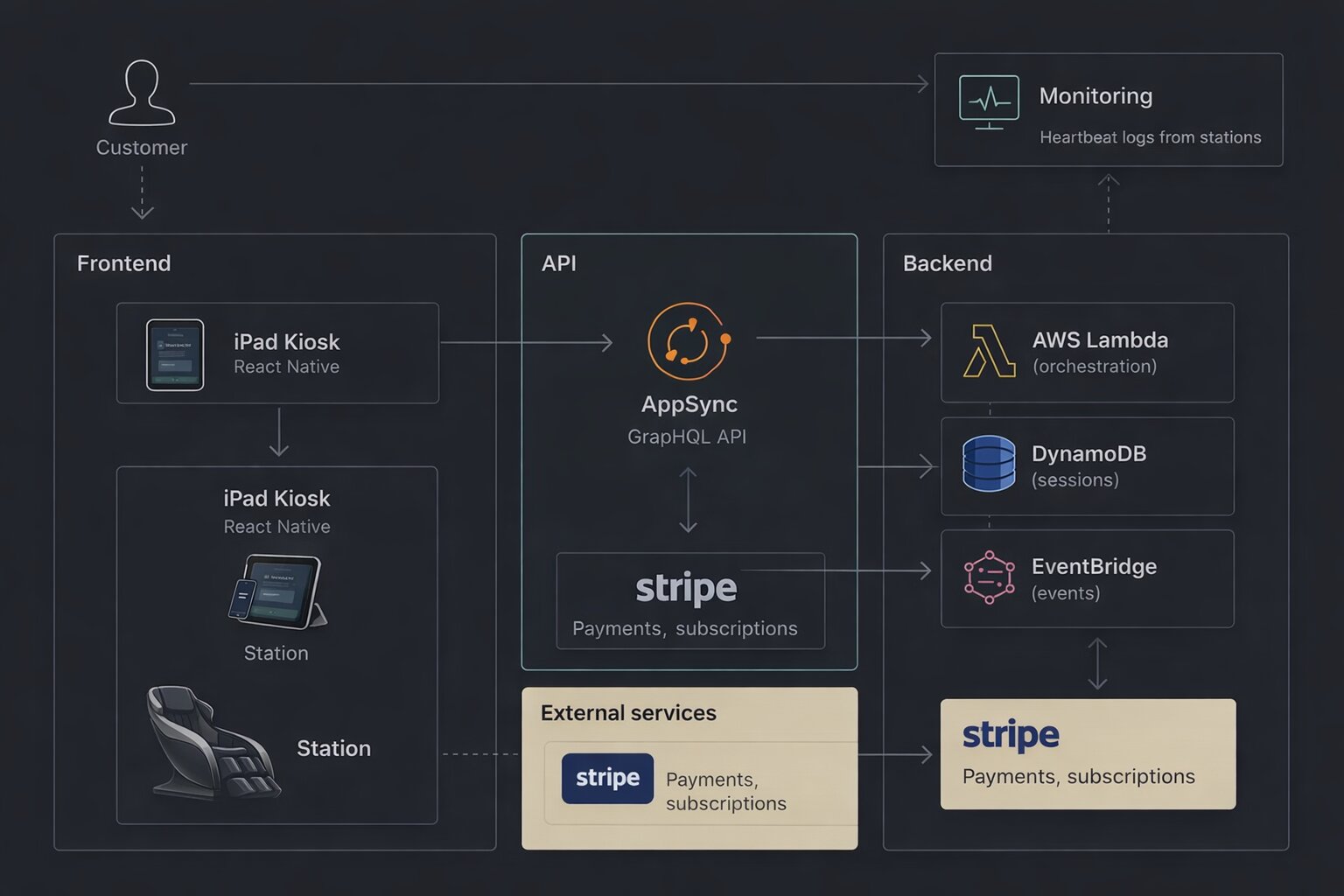
High-level view of the platform showing how the iPad kiosk, GraphQL API, serverless backend services, Stripe billing, and monitoring flows fit together.
Frontend
React Native iPad kiosk and customer-facing web flows.
Backend
AppSync, Lambda, DynamoDB and event-driven orchestration.
Operations
Heartbeat monitoring, station health visibility, and payment lifecycle handling.
Technical challenges
- Reliable station assignment in real time
- Device heartbeat and health monitoring
- Billing complexity across passes and memberships
- Operational resilience in a physical venue
Outcomes
- Supported 15 iPads in production
- Reduced staff workload by 80%
- Reduced downtime by 90%
- Enabled integrated Stripe billing workflows
iPad application
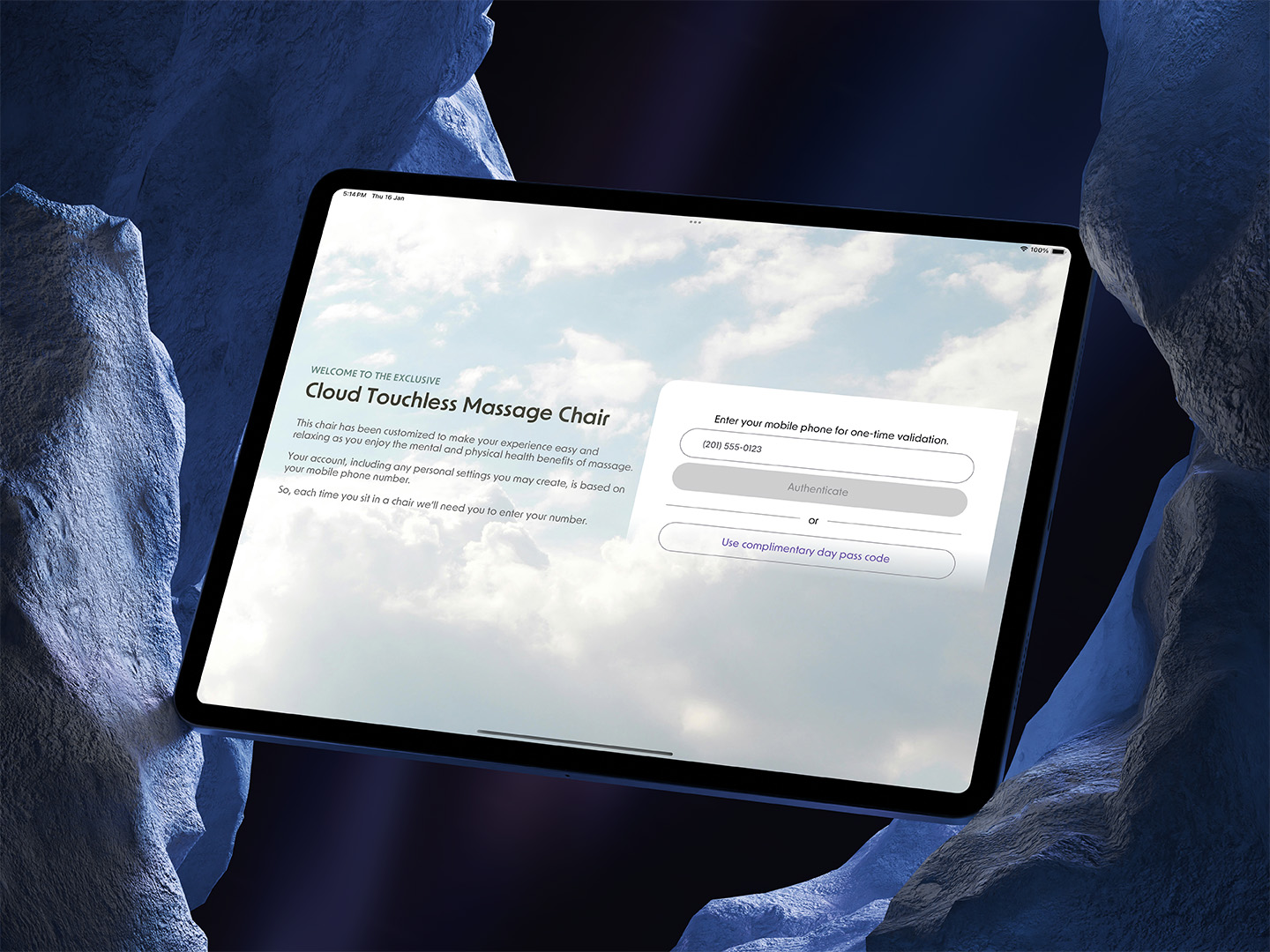
The React Native iPad app handled station-level interactions, session control, device communication, and customer-facing in-store workflows.
Key takeaways
This project strengthened my experience in building systems that bridge frontend apps, serverless backends, payments, and real-world operational reliability. It was a strong example of how software design decisions directly affect customer experience in physical environments.